


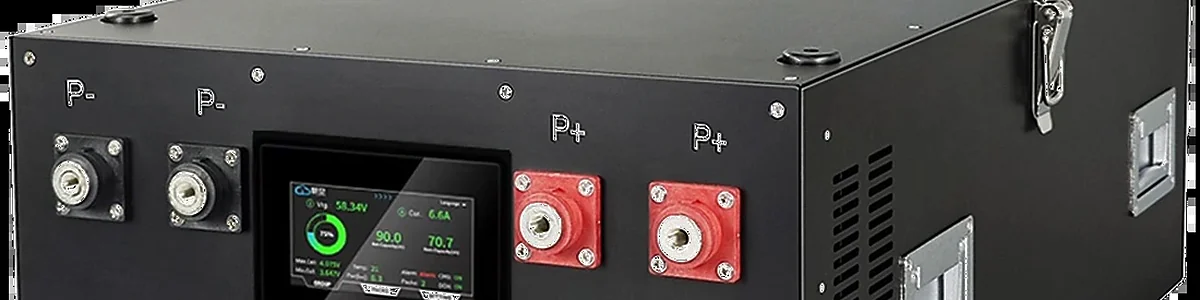
A portable power station is bought for one bad night: a storm, a campsite, a power cut. It sits unused for months and then has to deliver its full rated output without argument.
What the unit has to do
| Unit size | Output | Cell build |
|---|---|---|
| 300 Wh | 300–500 W | 18650 or 26700 high-rate |
| 1 kWh | 1–1.5 kW | 32140 or prismatic |
| 2–3 kWh | 2–3 kW | Large prismatic |
Why storage behaviour matters
The unit spends most of its life at partial charge in a cupboard or a car boot. Sodium tolerates that better than a high-energy lithium cell, and it does not need to be stored at a specific state of charge to avoid damage.
What the design has to check
Peak output current against the BMS rating — not the average. A 2 kW inverter on a 1 kWh pack pulls 2C continuously, which most cells handle but many protection boards do not. Reverse-polarity protection on the input and a pre-charge on the output are what stop the unit failing on first use.
Where sodium is not the choice
Where the product competes on weight and capacity per litre, LFP or NMC wins and sodium does not. Where it competes on cycle life, cold storage and price stability, sodium is competitive.