


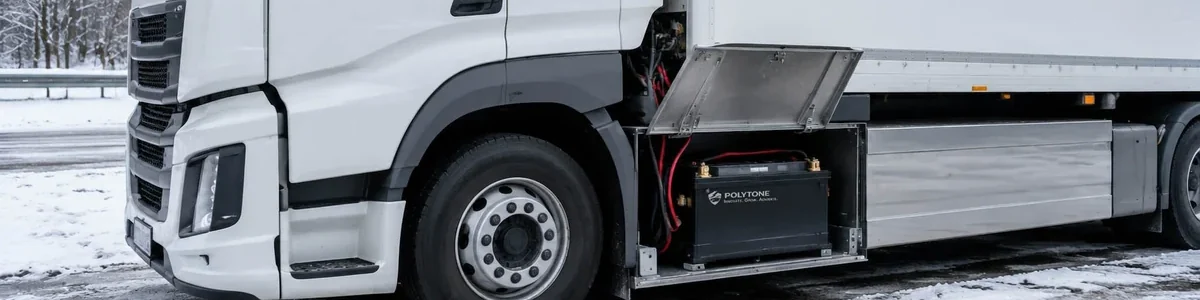
A food truck runs a fridge all day, lights and a water pump in the evening, and charges between pitches. The pack has to survive a service window with no hook-up — which is where a small lead-acid bank runs out.
What the loads look like
| Load | Draw | Daily |
|---|---|---|
| Fridge / display chiller | 150–300 W | 3–6 kWh |
| Lights and signage | 50–150 W | 0.5–1.5 kWh |
| Water pump and extractor | 100–300 W | 0.5–1 kWh |
| Espresso machine (if on battery) | 1.5–3 kW | Short peaks |
Cooking is usually gas or generator; the battery carries refrigeration and services. That matters, because it keeps the inverter load small and the pack affordable.
Charging between pitches
Shore power through a proper charger is the normal route. Sodium accepts a high charge rate, so a few hours on a socket returns a full day of fridge duty — but the charger must be set for the pack’s profile, not the old lead-acid one.
Weight and space
A sodium pack of the same usable energy weighs a fraction of the lead-acid bank it replaces, and the space saved usually becomes storage. That is often the deciding factor in a compact truck.
Where it does not pay
If the truck works a fixed pitch with a permanent hook-up, the battery is only a backup and does not need cycle life. Where it pays is a truck that moves between pitches with no reliable power.