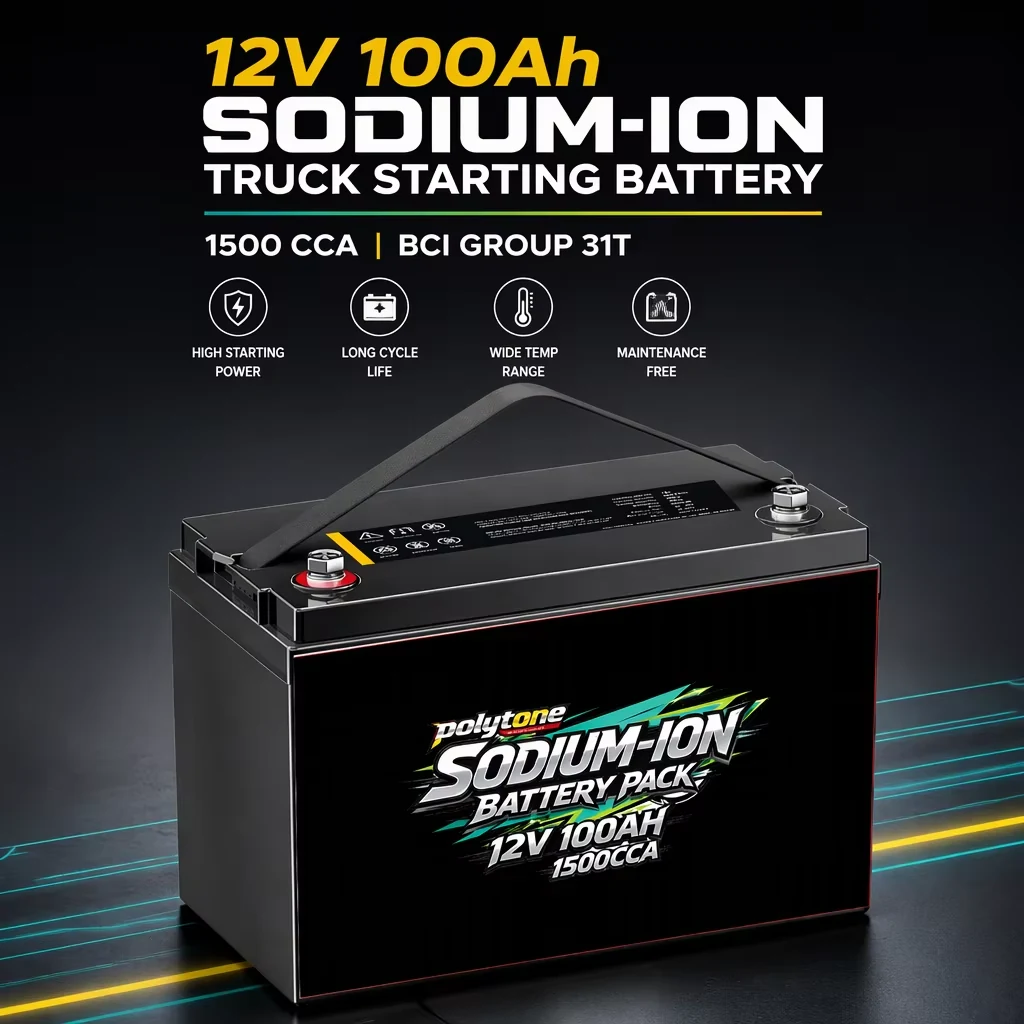
What it is
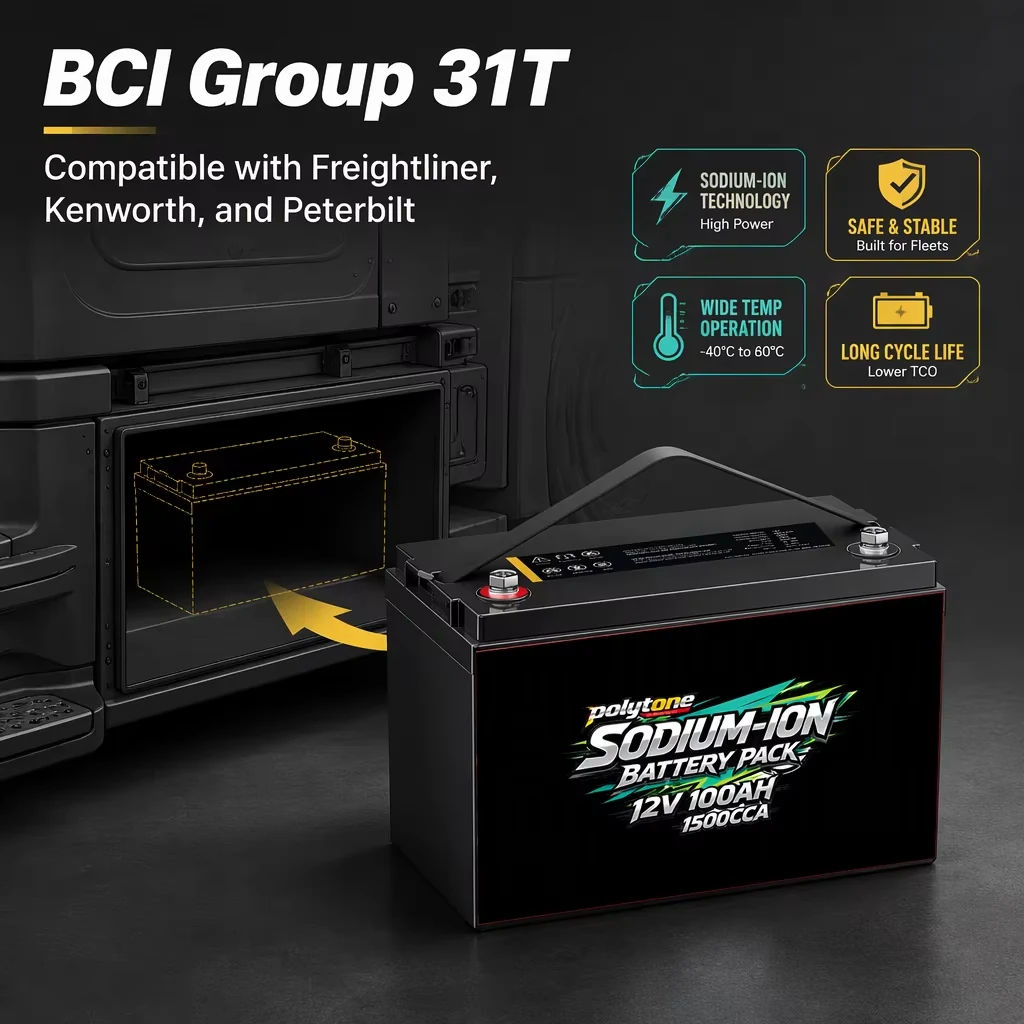
A 12 V 100 Ah sodium-ion battery built to the BCI Group 31T footprint, rated 1500 CCA and intended to start heavy-duty truck engines in the cold. It drops into the tray a Group 31 lead-acid block comes out of, so the change is a swap rather than a conversion.
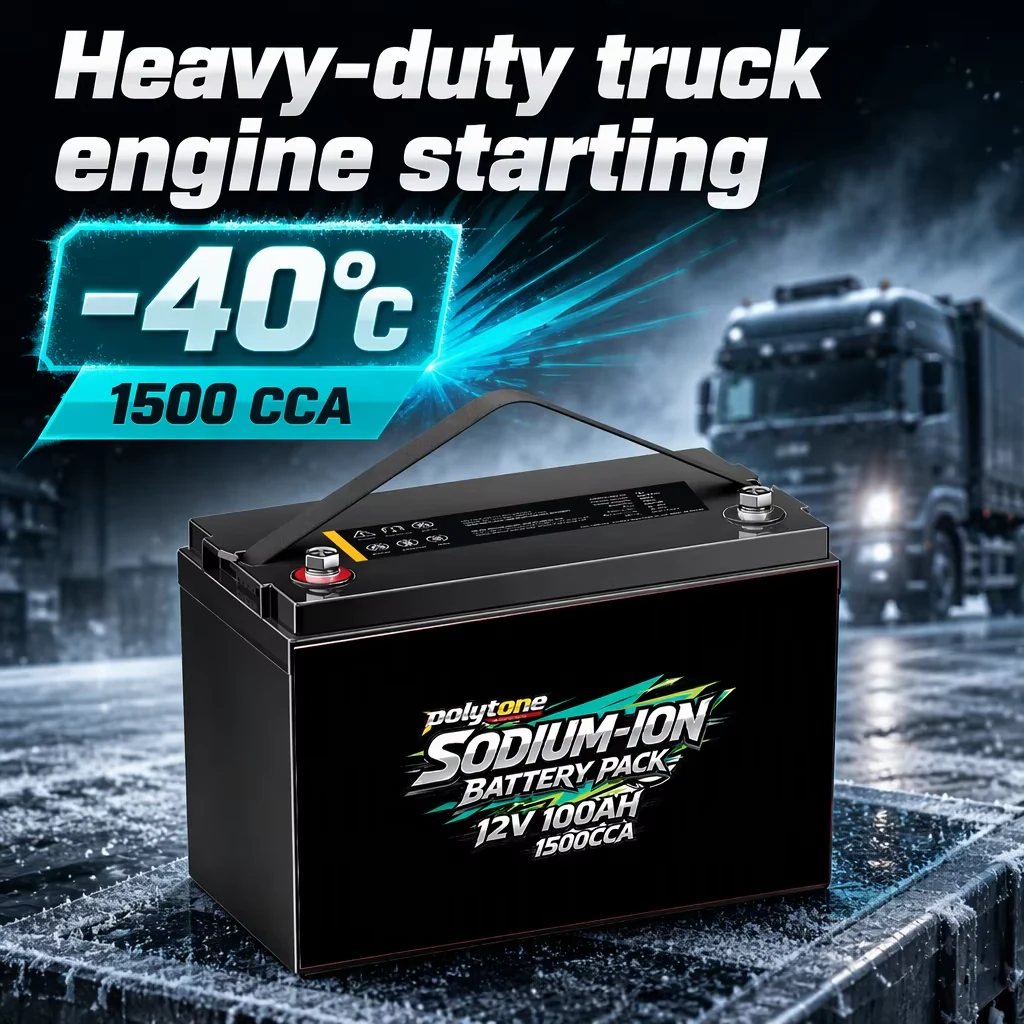
Group 31 is the size most North American heavy trucks use for starting. The 100 Ah capacity is not the interesting number here — the cold-cranking current is, because that is what decides whether a truck starts at −40 °C with 15W-40 in the sump.
Four things that matter
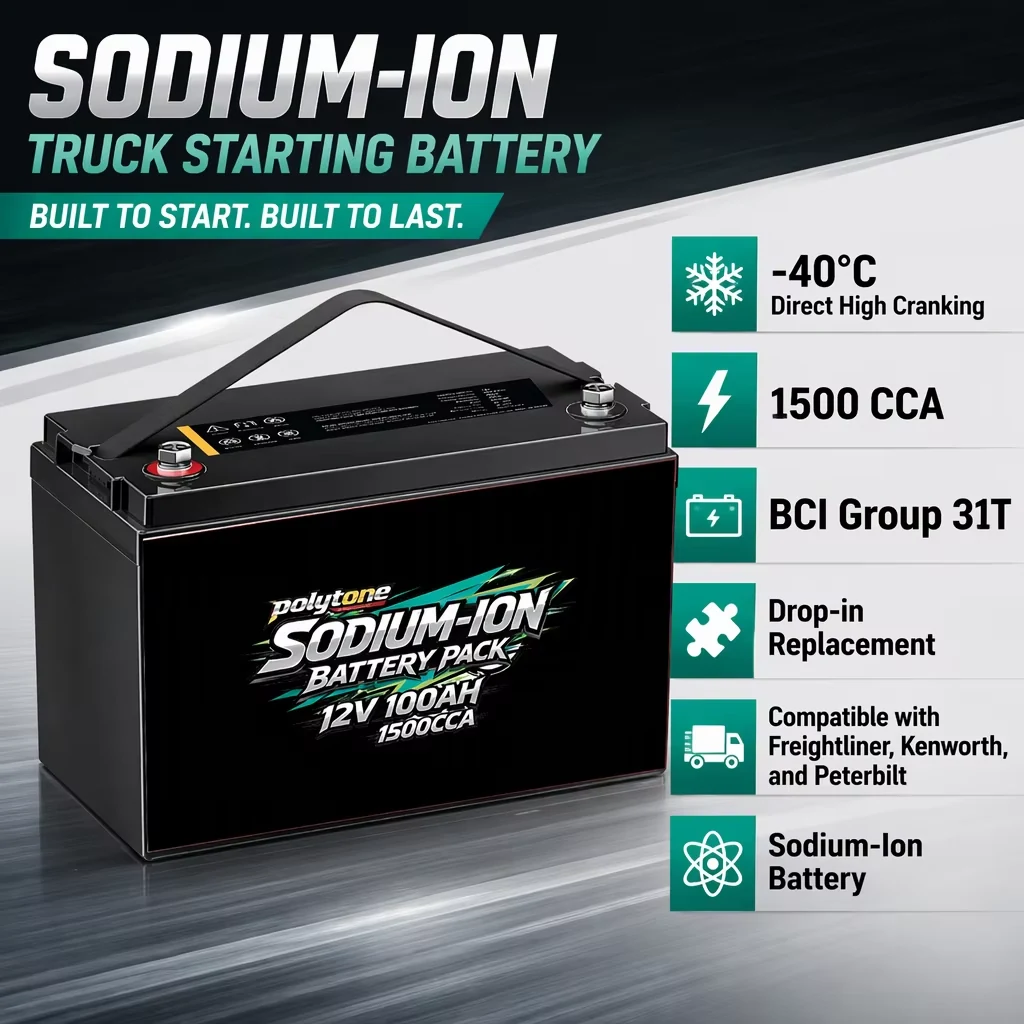
−40 °C direct cranking
Starts a cold diesel without a warm-up cycle: the pack delivers cranking current at −40 °C, which is the number a winter haul needs, not a bench figure at 25 °C.
1500 CCA
A cold-cranking rating of 1500 A at the Group 31 footprint. That is the output a heavy-duty sleeper cab and a large-displacement engine ask for on the first turn.
BCI Group 31T drop-in
Same tray, same hold-down, same terminal posts as the Group 31 lead-acid block it replaces — Freightliner, Kenworth and Peterbilt applications in the list below.
Maintenance-free with BMS
Sealed, no watering, and an internal battery management system that protects against over-charge, deep discharge and short circuit.
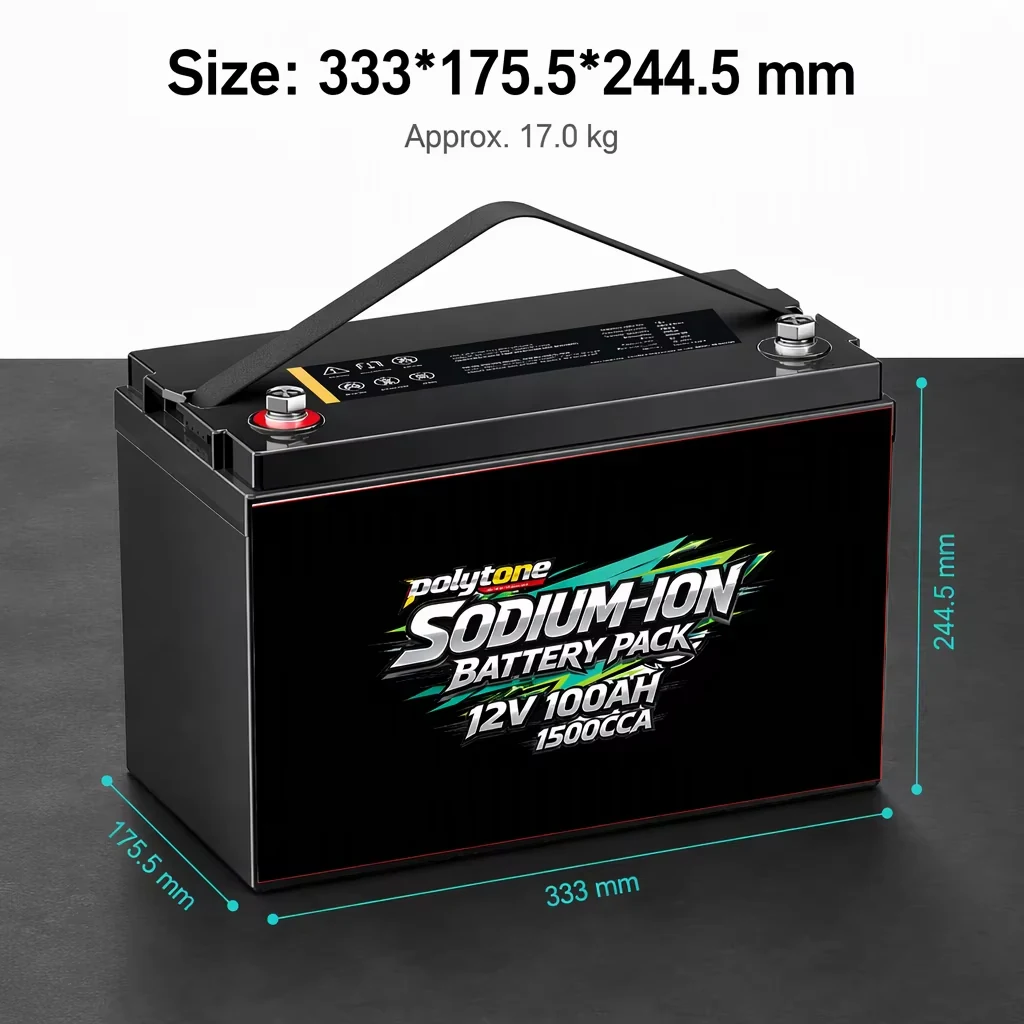
Size and weight
333 × 175.5 × 244.5 mm, approximately 17.0 kg. Check the hold-down and the cable length before ordering: a Group 31T replacement keeps the footprint, but the terminal height and the weight on the tray are worth confirming against the vehicle.
32140 cells in 4S10P: four in series for the 12 V nominal, ten in parallel for the 100 Ah. That is why the pack can deliver 1500 A without the voltage collapsing.
Gallery
Specification
| Nominal voltage |
12 V |
| Nominal capacity |
100 Ah |
| Cold cranking |
1500 CCA |
| Cell configuration |
32140 cells, 4S10P |
| Group size |
BCI Group 31T |
| Dimensions |
333 × 175.5 × 244.5 mm |
| Weight |
approx. 17.0 kg |
| Chemistry |
Sodium-ion |
| Operating temperature |
−40 to +60 °C |
| Maintenance |
Sealed, maintenance-free, internal BMS |
What it replaces
A Group 31 lead-acid starting battery in Freightliner, Kenworth and Peterbilt trucks. Same group size, same terminal layout, same hold-down. The charger and the alternator do not need changing; the low-voltage cut-off on a battery-protection device does, because a sodium pack discharges deeper than the block it replaces.
Where it does not fit
Not for a truck whose charging system is set for a fixed lead-acid absorption voltage that cannot be adjusted, and not for a bay that only takes a shorter Group 34 or 24F case. If the vehicle has a battery monitoring sensor on the negative post, tell us the model — the sensor has to be told the new capacity or the state-of-charge reading will drift.
 All batteries
 Sodium-ion cylindrical cells
 Sodium-ion prismatic cells
 Sodium-ion pouch cells
Compare all cells →