


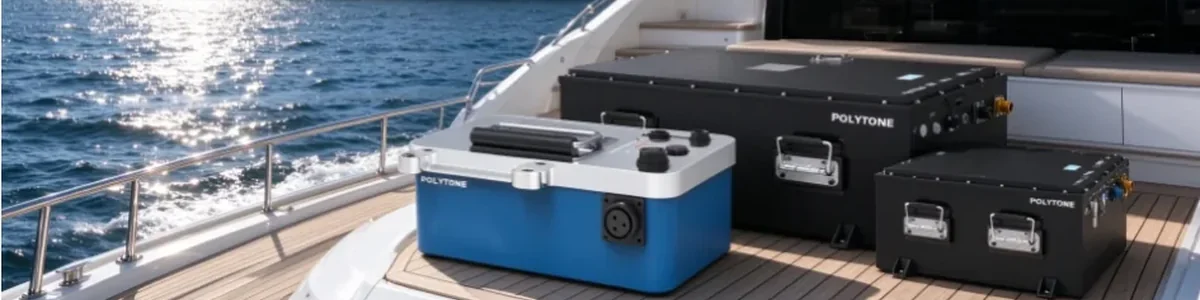
A marina pedestal has the same problem as a campsite with worse conditions: long cable runs, salt air and boats that expect 230 V on demand.
What a berth draws
| Vessel | Daily | Notes |
|---|---|---|
| Day boat, charging and lights | 0.5–1 kWh | Occasional |
| Cruiser with fridge | 2–4 kWh | Continuous when occupied |
| Liveaboard | 4–10 kWh | High, seasonal |
How to size a pedestal
1. Peak demand. A kettle or a heater draws 1–2 kW regardless of daily energy. The inverter sizes on the peak.
2. Daily energy. Multiply by the berth’s occupancy pattern, not by full-time use.
3. Recharge window. Pedestals with solar need the array sized for the worst month, not the summer.
Salt air and corrosion
Every connector, lug and terminal in a marina corrodes. A battery pedestal needs marine-grade hardware and a sealed enclosure; the cells are rarely the failure, the connections are.
Seasonality
Marinas are full for four months and empty for eight. A pack that sits idle for most of the year has to hold charge without damage — which is what sodium does and lead-acid does not.
Where it does not pay
Grid-connected berths. A metered supply is cheaper than a battery buffer unless load peaks are the problem.
Very low occupancy. A pedestal that charges twice a year will not pay back.
Questions buyers ask
Can one pedestal serve several berths?
Yes, with a shared bank and distribution. Cost per berth drops, but so does resilience.
How do we meter usage?
With an energy meter per outlet. That is a commercial decision as much as a technical one.
What about winter?
The pack holds charge at rest. Charging below freezing needs warmer conditions or a heater.
Is it safe near water?
With sealed enclosures, RCD protection and marine-graded hardware. Water and electricity need the electrical design first.