


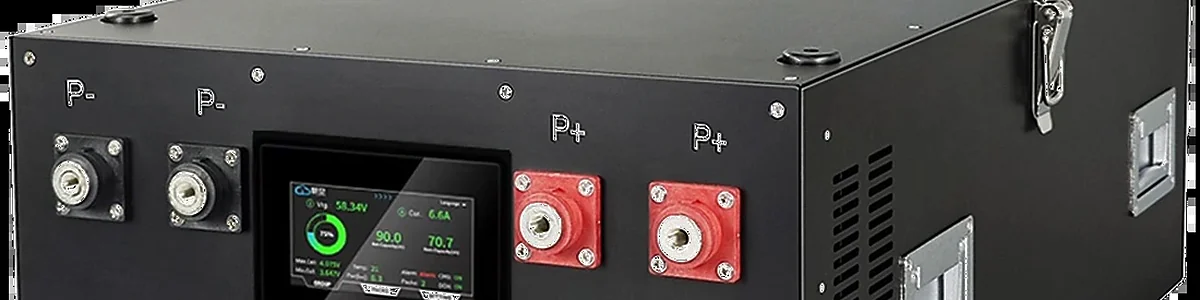
A 4×4 dual battery system is a fridge, a compressor and a few lights running off a second battery that is charged while driving. The battery is not the hard part; the charging chain is.
What the auxiliary battery actually runs
| Load | Daily draw | Pack that suits |
|---|---|---|
| 12 V fridge, 40–50 L | 25–45 Ah | 12 V 100 Ah |
| Fridge + lights + charging | 40–70 Ah | 12 V 150–200 Ah |
| Adding an inverter | 80 Ah+ | 12 V 200 Ah or 24 V system |
Why the DC-DC charger is not optional
An alternator delivers whatever voltage the vehicle’s regulator asks for, which on a modern 4×4 can drop to 12.4 V for fuel economy. That is below what a sodium pack needs to reach full charge. A DC-DC charger takes the alternator input and outputs a proper charge profile — without it, the auxiliary battery never gets full.
Cold and heat
Discharge works well below freezing, which suits a battery mounted in a tray. Charging is the limit: the pack must be above its charge cut-off temperature, and an engine bay in winter may not be. A cabin-mounted pack with a vent is the safer arrangement.
Where it is not worth it
If the vehicle already has a healthy AGM auxiliary battery and the trips are weekend-length, the gain is small. Overlanding with a compressor fridge and no hook-up is where a sodium pack earns its place.