


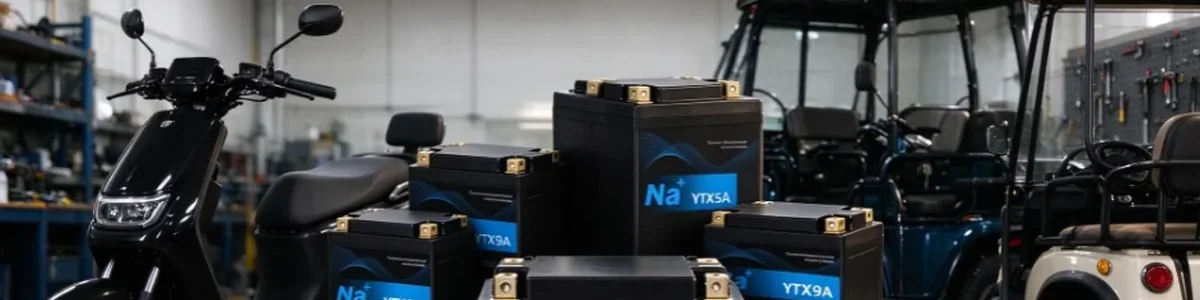
An e-rickshaw battery is a revenue asset: every hour off the road is money lost. That is why charge time, not cycle life, is the number drivers care about.
What is being replaced
| Vehicle | Lead-acid set | Nominal |
|---|---|---|
| Passenger e-rickshaw | 4 × 12 V 100 Ah | 48 V |
| Auto-rickshaw conversion | 5 × 12 V 100 Ah | 60 V |
| Cargo variant | 5 × 12 V 120 Ah | 60 V |
A 48 V sodium pack discharges deeper, so a lower Ah figure delivers comparable daily range — which matters because the pack also weighs a fraction of the lead it replaces.
Charging in a shared bay
Drivers charge wherever there is a socket, often several vehicles on one circuit. Sodium accepts a higher partial-charge rate than lead-acid, so a shorter window returns more range — but the charger has to match the pack, and a lead-acid charger will not terminate correctly.
What to check before quoting
Bay dimensions, terminal layout, controller low-voltage cut-off and the charger. The cut-off is the one that catches people: a controller set for lead-acid reads a sodium pack as empty while it still has useful charge.
Where it is the wrong purchase
If the vehicle is near the end of its life, or the driver charges only overnight at home on a fixed lead-acid charger, the change adds cost without changing the daily routine.