


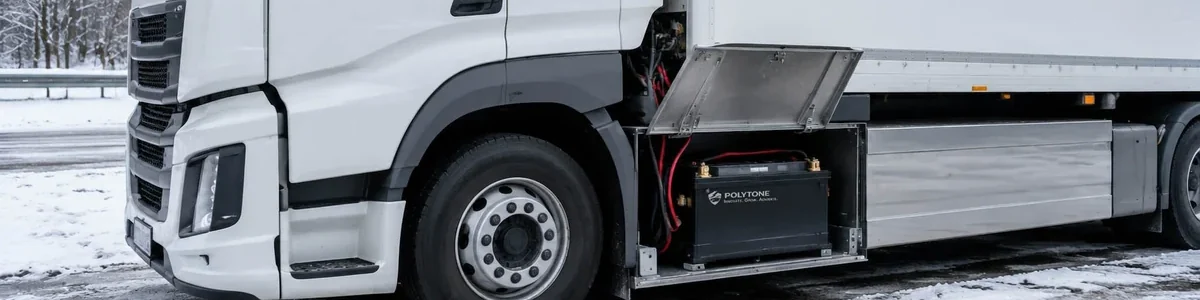
A reefer unit runs a compressor for hours in ambient cold, then needs a hard start for defrost. Batteries on these units fail early because the load profile is unforgiving and the alternator is shared.
What the unit needs
| Unit | Continuous | Start / defrost |
|---|---|---|
| Small van reefer | 0.5–1.5 kW | 2× running |
| 7.5 t truck reefer | 3–6 kW | 2–3× running |
| Trailer reefer | 5–10 kW | Engine-driven or separate |
Cold ambient, warm battery
The battery usually sits near the unit, exposed to the same cold. Discharge is fine; charging wants the pack above its cut-off, which on a short urban route may never happen in winter. A pack with a heater on a thermostat, or one mounted away from the coldest zone, is the practical fix.
Sharing the alternator
Adding a reefer and a lift gate to one alternator is how electrical systems fail. Sizing the auxiliary circuit from the sum of the peak loads, not the average, is the difference between a working truck and a flat battery at the third drop.
Where sodium is the wrong answer
Where the reefer is engine-driven and the battery only starts it, a standard starting battery is cheaper. Where the battery carries the load with the engine off, the chemistry matters.