


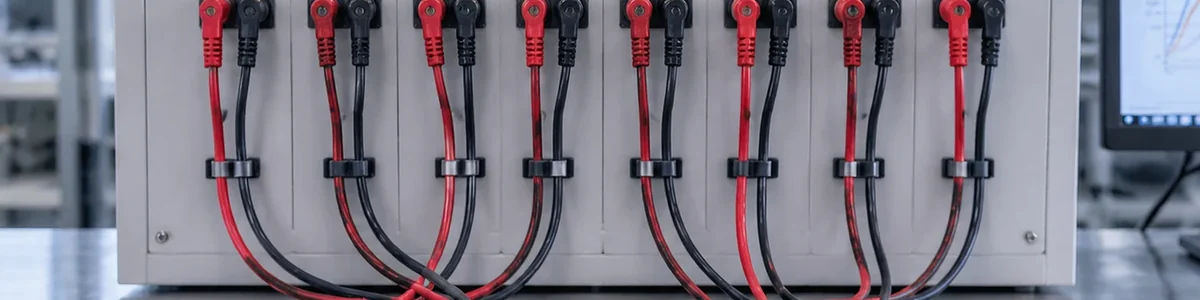
A 500 kWh cabinet has three big cost blocks: cells, power conversion, and the thermal system. Sodium does not remove the third, but in a cold or mild climate it shrinks it — and that is where the payback moves.
What the thermal system was for
A lithium cabinet in a cold site needs heating to accept charge and cooling to survive summer afternoons. That means a chiller or HVAC unit, insulation, sensors, and the parasitic load they draw — often a few percent of throughput, all year.
On a sodium pack rated for discharge to −40 °C, the heater becomes a charge-only concern, and in many sites a scheduled charge window is enough.
Where the saving actually appears
Two places. Capex: a smaller HVAC unit and less insulation. Opex: no heating load in winter and a lower parasitic draw, which shows up in the round-trip efficiency.
It does not appear in the cell price. Sodium cells are not dramatically cheaper per kWh today; the case rests on cycle cost and on the system around them.
Fire engineering
A higher thermal runaway onset does not remove the requirement for detection and suppression. It changes the spacing, the propagation test result and, sometimes, the insurance conversation.
Treat it as a design input, not as a marketing line. Your fire engineer will ask for the test report, not the brochure.
A worked shape
Take a 500 kWh cabinet cycling once a day on a tariff with a 0.15 USD/kWh spread. The energy arbitrage is 75 USD/day at full depth — before efficiency losses and before the demand charge saving, which in most industrial sites is the larger number.
Model it with your own tariff before choosing a chemistry. The chemistry decides what the system costs; the tariff decides whether the project exists.
Cell choices inside the cabinet
A C&I cabinet is usually built from 55 Ah or 220 Ah prismatic cells. The 55 Ah format is quoted at 4,000 cycles at 0.5C; the 220 Ah format specifies 0.50C charge to 3.95 V and discharge to 1.50 V. Fewer, larger cells cut assembly cost; more, smaller cells spread a failure over less capacity.
Where to go next
Questions we get asked about this
How much does a C&I cabinet save in winter?
It depends on the tariff and the heat you no longer buy. Model the parasitic load of the HVAC you remove against the pack cost difference.
Is sodium cheaper than LFP for C&I today?
Not per kWh on the invoice. The case comes from cycle cost and from the thermal system you can shrink.
Do I still need fire suppression?
Yes. A higher thermal runaway onset lowers risk and can change spacing and detection design, but it does not remove the requirement.