


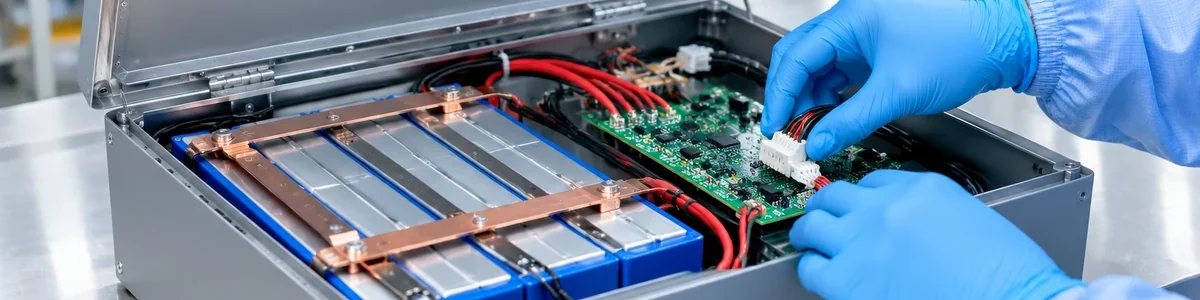
Four numbers separate the cells in our catalogue, and only the first one appears in a sales conversation.
1. Continuous C-rate, not peak
A 40C pouch cell sounds like it will run a power tool. It will — at 20 °C, for a short pulse, with the datasheet’s derating applied. At −40 °C the same cell is a 5C cell. If a product page quotes a single C-rate without a temperature, ask for the derating table; it changes the BMS rating and the cable size.
2. Cycle life, with its conditions
“10,000 cycles” means nothing without the C-rate, the depth of discharge, the temperature and the preload. Our prismatic cells are quoted at 0.5C/0.5C, 20–80% depth, 25 °C and 300 kgf of compression. Run the same cell at 1C to 100% depth with no clamp and you will not see 10,000 cycles. The number is real, but it belongs to those conditions.
3. Charge temperature floor
Discharge to −40 °C is common across sodium-ion. Charging is the hard part: below about −20 °C sodium plates on the anode instead of intercalating, and the capacity you lose is permanent. A cell that accepts charge at −30 °C is worth more in a truck chassis than a cell with 10% more energy density that has to be heated.
4. Energy per cell, and what it does to the pack
A 190 Ah prismatic cell and a 4.5 Ah cylindrical cell are not substitutes. The big cell reduces part count and busbar joints; the small cell gives you a shape that fits a handle and a BMS you can replace. Choose the form factor for the pack, then the chemistry for the temperature — not the other way round.
Where to check
The cell database lists all four numbers side by side for every cell we stock, with the test conditions in the notes. Sort by C-rate to see what will actually deliver current, then filter by low-temperature to see which of those will take a charge in winter.